AI Detector for Student Papers: 5 Tools to Catch Cheating
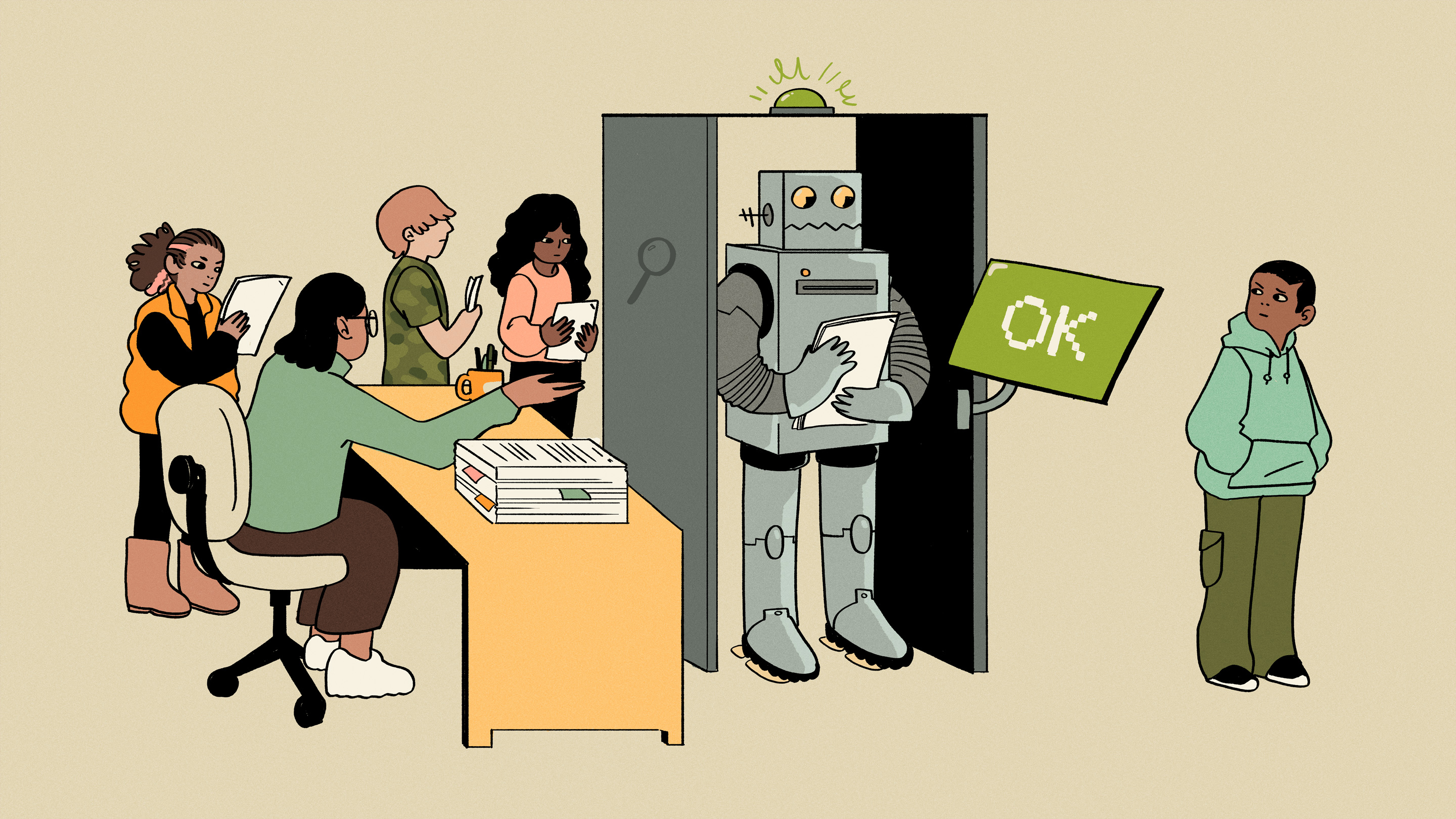
The rise of sophisticated AI writing tools has created a new challenge for educators: how to ensure academic integrity when students can generate entire essays with a single prompt. A recent study showed that a staggering 94% of AI-generated college writing goes undetected by professors. This isn't just about catching cheaters; it's about fostering genuine learning and critical thinking. So, how can you navigate this new landscape? This article explores the world of the AI detector for student papers, providing practical tools and strategies to maintain academic standards.
If you're looking for an AI tool to help with conducting research, Apollo AI offers exactly that — free to try.
The Shifting Sands of Academic Integrity: Why AI Detection Matters
The emergence of AI writing tools like ChatGPT and Gemini presents both opportunities and threats to academic integrity. While AI can be a powerful tool for brainstorming, outlining, and even editing, its misuse raises serious concerns about plagiarism and the devaluation of original thought. The question, "Can professors detect AI generated content?" is now a critical one. Understanding how to detect AI writing in student papers is crucial for maintaining a fair and rigorous learning environment. This goes beyond simply running an AI plagiarism checker; it requires a nuanced understanding of AI's capabilities and limitations.
Understanding How AI Writing Detection Works
So, how does an AI detector for student papers actually work? Most AI writing detection tools use machine learning models trained to identify patterns and characteristics commonly found in AI-generated text. Grammarly explains that these models analyze factors like sentence structure, word choice, and predictability. They essentially try to determine if the text was produced by a human or a machine. However, it's important to understand that these tools aren't foolproof. They operate on probabilities and can produce both false positives (incorrectly flagging human-written text as AI-generated) and false negatives (failing to detect AI-generated text).
💡 Pro Tip: You can do this automatically with Apollo AI's deep research feature. It searches across multiple sources, reads full articles, and synthesizes the results — all in one click.
Five Tools to Detect AI in Student Papers (and Their Limitations)
While no AI writing detection tool is perfect, some are more effective than others. Here's a look at five options currently available, along with their strengths and weaknesses:
- Turnitin: A widely used plagiarism detection software, Turnitin has integrated AI writing detection capabilities into its platform. It analyzes submissions for patterns indicative of AI-generated text and provides a similarity score. However, it's crucial to remember that Turnitin's AI detection is not always accurate, as noted by Vanderbilt University's decision to temporarily disable the tool.
- GPTZero: This tool is specifically designed to detect AI-generated text. It analyzes text for "perplexity" (randomness) and "burstiness" (variation in sentence length) to determine the likelihood of AI involvement. GPTZero boasts high accuracy rates, but independent testing is always recommended.
- Copyleaks: Copyleaks offers an AI content detector for academic research that analyzes text for patterns and anomalies. They also offer AI image and deepfake detection. Their technology aims to identify AI-generated content across various platforms.
- Originality.AI: This platform combines plagiarism checking with AI detection. It offers a comprehensive solution for assessing the originality and authenticity of student work. Originality.AI's accuracy is frequently debated, and comparing it to other tools like Winston AI is recommended.
- Grammarly: While primarily known as a grammar and writing assistant, Grammarly also offers an AI detector. Grammarly focuses on stylistic inconsistencies and patterns indicative of AI-generated text.
It's critical to understand that these tools are indicators, not definitive proof. Always combine AI detection with your own critical assessment and direct interaction with the student.
Beyond the Algorithm: Holistic Approaches to Detecting AI Use
Relying solely on an AI detector for student papers can be problematic. False positives can lead to unfair accusations, and tech-savvy students can find ways to circumvent detection. A more holistic approach involves combining AI detection tools with other strategies:
* Analyzing Writing Style: Look for inconsistencies in tone, vocabulary, and sentence structure. Does the writing sound like the student's previous work? Does the writing demonstrate a deep understanding of the subject matter?
* Verifying Citations: AI-generated text may include citations that don't exist or don't accurately support the claims being made. Carefully check all sources. This may involve comparing the cited material with information gathered using a research tool like Apollo AI, which can rapidly analyze numerous documents.
* Assessing Critical Thinking: AI can generate coherent text, but it often struggles with nuanced arguments, original insights, and critical analysis. Evaluate the depth and complexity of the student's thinking.
* Engaging in Dialogue: The most effective way to determine if a student understands their work is to discuss it with them. Ask them to explain their reasoning, defend their arguments, and elaborate on their research. Marian University recommends a discussion, not an accusation, if you suspect AI use.
How to Detect AI Writing in Student Papers: A Checklist for Educators
Here's a quick checklist to guide your assessment:
- Run the paper through an AI detector: Note the score, but don't rely solely on it.
- Compare to previous work: Does the writing style match the student's typical voice and abilities?
- Check citations: Are all sources valid and accurately cited? Do they support the claims made in the paper?
- Evaluate critical thinking: Does the paper demonstrate original thought, nuanced arguments, and a deep understanding of the topic?
- Engage in discussion: Ask the student to explain their work and reasoning.
AI Plagiarism Checker vs. AI Writing Detector: Understanding the Differences
It's important to distinguish between an AI plagiarism checker and an AI writing detector. A plagiarism checker compares a student's work to a database of existing sources to identify instances of copied text. An AI writing detector, on the other hand, analyzes the text itself to determine if it was likely generated by an AI model. While some tools combine both functions, they address different aspects of academic integrity. SciSpace offers a useful comparison of these tools.
| Feature | AI Plagiarism Checker | AI Writing Detector |
|---|---|---|
| Purpose | Detects copied content from existing sources | Detects content generated by AI models |
| Method | Compares text to a database of sources | Analyzes text for AI-generated patterns and characteristics |
| Output | Similarity score, list of matching sources | Probability score, indicating likelihood of AI generation |
| Limitations | Can't detect original AI-generated content | Can produce false positives and false negatives |
| Apollo AI Integration | Analyzes text for AI-generated patterns and characteristics alongside plagiarism | Detects copied content from existing sources alongisde AI-generated patterns and characteristics |
Addressing the Ethical Gray Areas: AI as a Research Tool vs. AI as a Writing Substitute
The increasing use of AI in academia raises complex ethical questions. Is it acceptable for students to use AI for brainstorming or editing, but not for generating entire essays? Where do we draw the line between legitimate AI assistance and academic dishonesty?
This is where tools like Apollo AI can play a crucial role. Rather than simply providing answers, Apollo AI helps students conduct deeper research, analyze sources, and synthesize information. It empowers them to develop their own ideas and arguments, rather than relying on AI to do the thinking for them. It's this distinction – using AI to enhance research versus replace it – that defines the ethical use of AI in academic settings. You can See Apollo AI pricing and select an option that best fits your research needs.
One of the ways Apollo AI has helped is by improving the quality of student research. For instance, a student struggling with a complex research paper on climate change used Apollo AI to quickly analyze dozens of research papers, identify key themes, and generate a comprehensive outline. The student then used this outline as a foundation for their own original writing. This is a prime example of AI supporting the research process without compromising academic integrity. Used by thousands of researchers and students, Apollo AI is becoming increasingly useful for improving academic quality.
How to Avoid the Pitfalls of Over-Reliance on AI Detection
Over-reliance on AI detectors for student papers can lead to several pitfalls:
* False Accusations: As mentioned earlier, AI detection tools are not always accurate and can produce false positives. Accusing a student of academic dishonesty based solely on an AI detection score is unfair and potentially damaging.
* Erosion of Trust: A climate of constant suspicion can erode trust between educators and students. It's important to remember that most students are genuinely committed to learning and academic integrity.
* Focus on Detection, Not Prevention: Relying solely on detection tools can shift the focus away from proactive measures to promote academic integrity. Educating students about the ethical use of AI and fostering a culture of original thought is crucial.
Key Takeaway: Use AI detection tools as one part of a broader strategy to promote academic integrity. Emphasize critical thinking, ethical research practices, and open communication.
Frequently Asked Questions
Q: What is the most accurate AI detector for college essays?
The accuracy of AI detectors for college essays varies, and no tool is perfect. Turnitin, GPTZero, Copyleaks, Originality.AI, and Grammarly are popular options, but all have limitations. It's crucial to use these tools as indicators, not definitive proof, and to combine them with other assessment methods.
Q: Can professors really detect AI generated content?
Professors can often detect AI generated content by analyzing writing style, verifying citations, assessing critical thinking, and engaging in dialogue with the student. While AI writing can be coherent, it often lacks the nuance, originality, and depth of understanding that characterize human-written work.
Q: Is there a free AI plagiarism checker for students that also detects AI writing?
Some tools offer free AI plagiarism checker options with limited AI writing detection features. However, the accuracy and reliability of these free tools may vary. It's generally recommended to use a combination of free and paid tools, along with your own critical assessment, to ensure comprehensive detection.
Start Your Research Today
Navigating the world of AI in education requires a nuanced approach. While AI detectors for student papers can be valuable tools, they should be used judiciously and in conjunction with other strategies. By fostering a culture of academic integrity, promoting critical thinking, and empowering students with research tools like Apollo AI, we can harness the power of AI for good while safeguarding the values of education.
Read more on our blog for further insights on AI and education!